 How-to
Emergency Locksmith Response Time: What to Expect
Table of Contents
- Emergency Locksmith Response Time Expectations: The Short Answer
- What qualifies as a locksmith emergency
- What Affects Locksmith Arrival Time
- How to Verify an Arrival-Time Estimate Before You Book
- The Full Timeline: From First Call to Completed Job
- What to Do While Waiting for a Locksmith
- Emergency Locksmith Cost and How It Ties to Response Time
- Why Some Jobs Take Longer On Site
- Frequently Asked Questions
Last Updated: October 21, 2026
Emergency Locksmith Response Time Expectations: The Short Answer
Most emergency locksmith call-outs in a metro area land between 20 and 60 minutes, depending on time of day, traffic and travel distance.
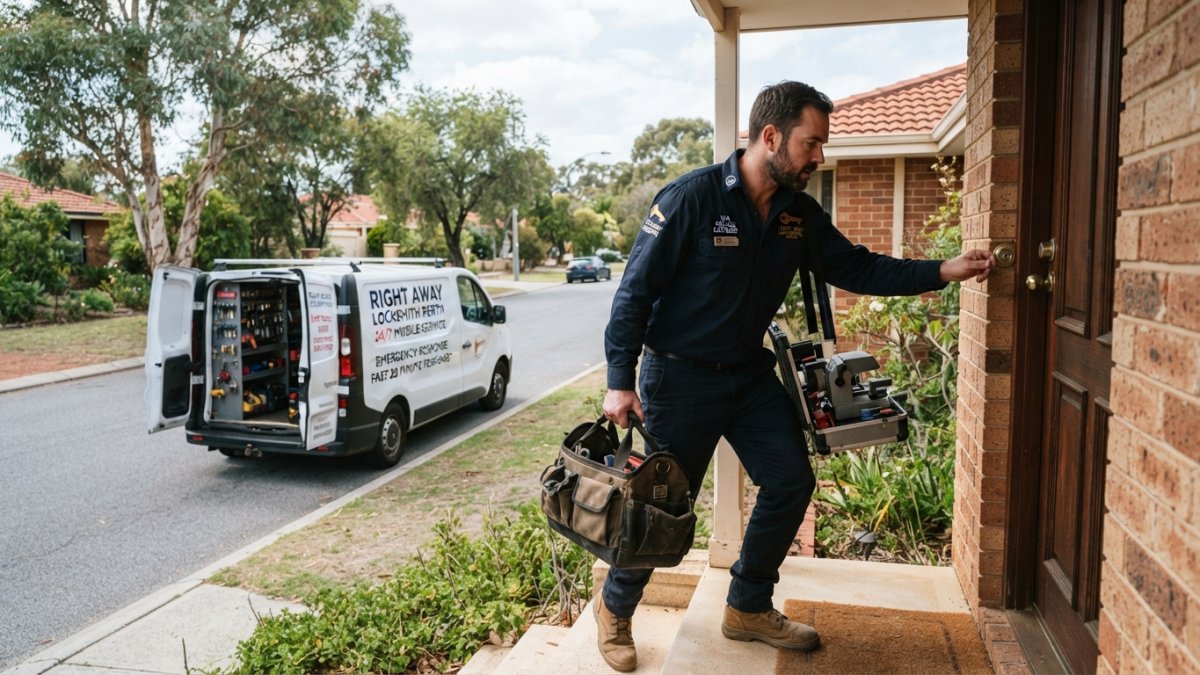
This guide from Right Away Locksmith Perth covers what drives locksmith response time, how to check an arrival estimate, and what to do while you wait.
Arrival time is only half the job, on-site time is the other half.
What qualifies as a locksmith emergency
A locksmith emergency is any lockout or lock failure that leaves you unable to secure or access a property you are entitled to enter.
The common ones we get called to:
- Home lockout - keys locked inside, lost, or snapped in the barrel
- Vehicle lockout - keys locked in the car, or a transponder key that has stopped working
- Broken key extraction - half a key stuck in the lock
Not every job is a true emergency. A jammed internal door with another exit can wait; a front door that will not lock at 11pm cannot.
What Affects Locksmith Arrival Time
The biggest frustration in a lockout is a vague ETA. Break arrival time into its two components and ask about each separately.
Dispatch time is the gap between your call ending and a technician rolling. Travel time is the drive to your door. Most providers blend the two, which is why estimates feel unreliable. Ask for both.
Dispatch time: how long before a technician is assigned
Dispatch time depends on whether a live dispatcher answers or a call centre takes a message. A staffed dispatch board confirms a technician within minutes; "someone will call you back" adds unknown delay.
Expect 5 to 15 minutes for dispatch in a metro area during normal hours, stretching on storm nights and long weekends. If dispatch alone is quoted at 30 minutes or more, treat the overall ETA with caution.
Travel time: distance, traffic and the technician's starting point
Travel time is what most people think of as the ETA, and it is most affected by conditions you can partly predict:
- Distance from the nearest available technician, not the provider's office. A van already in your suburb is a different job from one dispatched across the metro area.
- Time of day, a 20-minute run outside peak hour can take 40 to 50 minutes in commuter traffic.
- Weather and road conditions, heavy rain, hail and debris slow traffic and increase call volume at once.
- Technician suitability, a high-security cylinder, transponder key or commercial hardware may need a specialist van. Sending a general technician who returns for parts wastes more time than waiting for the right one.
A realistic metro travel range is 20 to 60 minutes: fast for simple lockouts near an available technician, slow for outer suburbs, peak hour or specialist work.
How to sanity-check an ETA before you commit
When a dispatcher gives you a number, ask:
- "Is that dispatch time or travel time?" If they cannot separate the two, the estimate is a guess.
- "Where is the technician starting from?" A suburb name is enough. "Our nearest tech is in [suburb]" is verifiable; "someone is on the way" is not.
- "What is the revised ETA if traffic is heavy?" A range rather than a single minute is honest.
If the ETA slips, ask for a revised time.
How to Verify an Arrival-Time Estimate Before You Book
Ask three questions before you agree to anything:
- "What suburb is your nearest technician in right now?" A dispatcher with live tracking can answer; a call centre reading a script cannot.
- "Is that arrival time or on-site time?" Arrival is when the van pulls up; on-site is how long the work takes after that.
- "What happens if you run late?" Traffic and prior jobs can delay anyone, but a provider should tell you when they expect to be late.
Get the quote in writing or by text before work starts. At Right Away Locksmith Perth, we confirm upfront fixed pricing before any work begins, so the number you agree to is the number you pay, and your proof of what was promised.
Check the licence too. Locksmiths in Western Australia should hold a current WA Police licence, and you can ask for the number before anyone touches your door.
The Full Timeline: From First Call to Completed Job
The job runs in four stages:
| Stage | What happens | Typical duration |
|---|---|---|
| 1. Call and triage | You describe the lockout, suburb and lock type; dispatch confirms price | 5-10 minutes |
| 2. Dispatch and travel | Technician assigned, drives to your location | 20-60 minutes |
| 3. Assessment | Technician inspects the lock and confirms the approach | 5-10 minutes |
| 4. On-site work | Entry, extraction, rekey or replacement | 10-45 minutes |
Total time from first call to completed job commonly runs 40 minutes to two hours, simple lockouts at the fast end, a broken key in a high-security lock or full replacement at the slow end.
What happens when the technician arrives
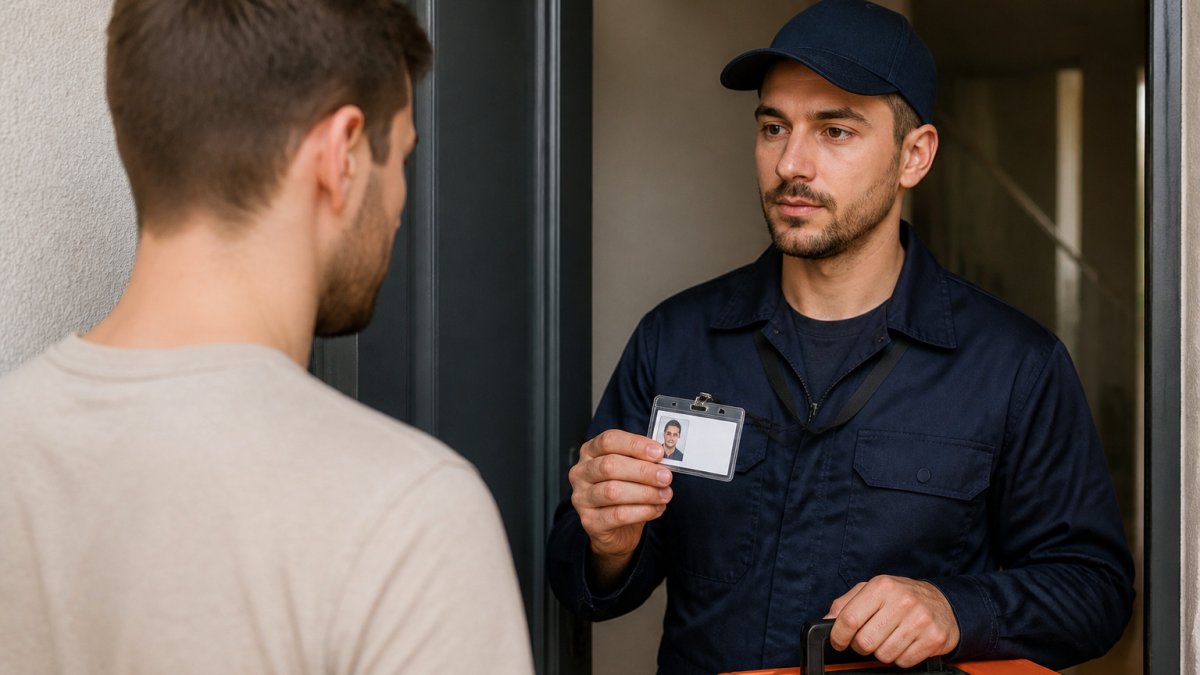
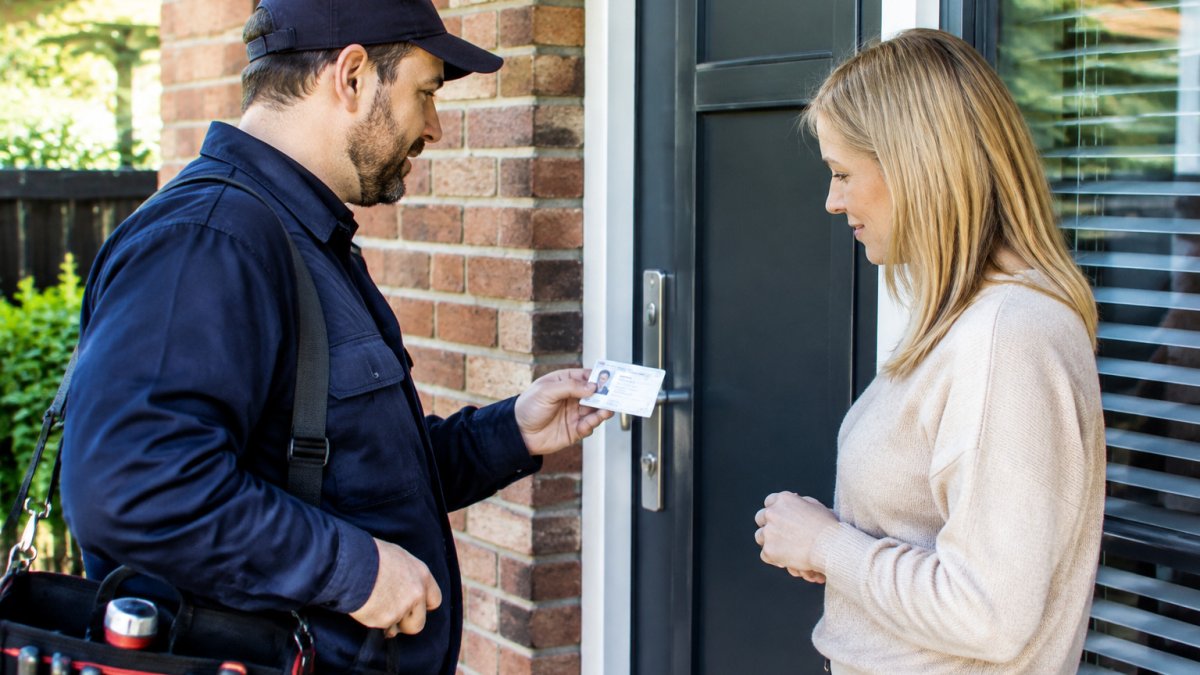
First, they confirm your identity and right to the property: a licence with the address, rates notice, lease or utility bill.
Then they assess the lock. Most home lockouts open without damage via picking or a decoder; a snapped key needs extraction tools; a failed mechanism may need drilling.
Once inside, check the property and confirm nothing else needs doing.
What to Do While Waiting for a Locksmith
Stay put, stay warm and stay safe. Most lockout risk comes from impatience, not the lock.
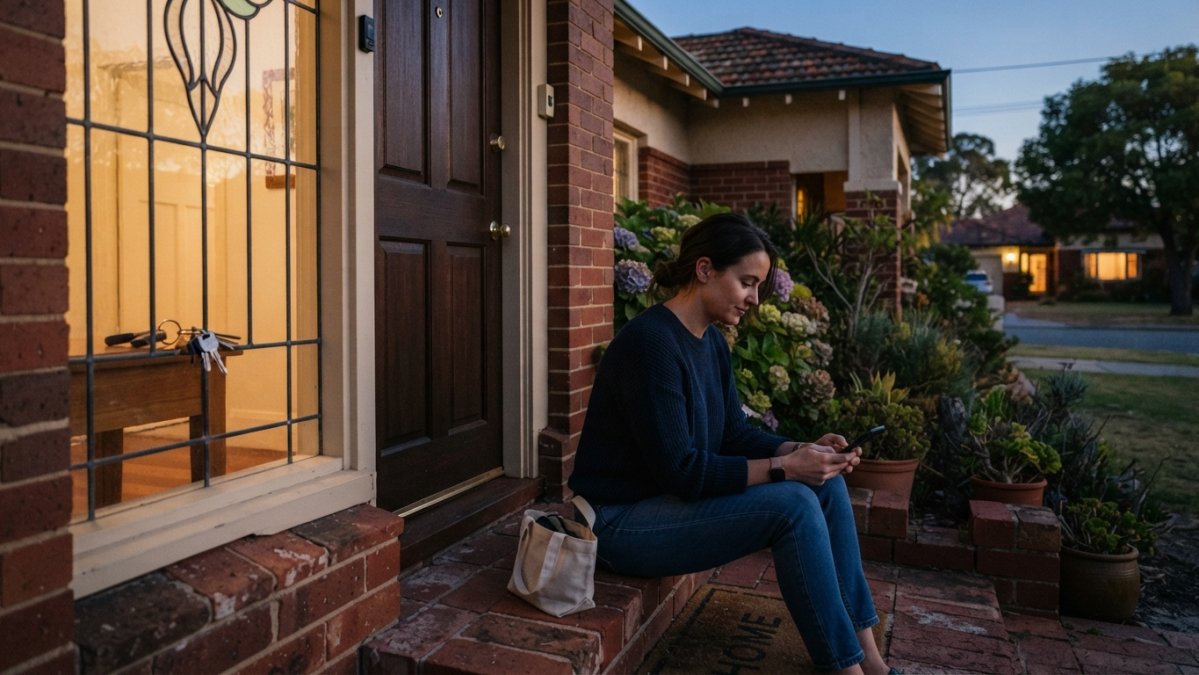
Work through this while you wait:
- Do not force the door. Picking a lock is quick; repairing a crowbarred frame is not, and it turns a cheap job into an expensive one.
- Do not climb through windows. Falls and cuts are the most common lockout injury we hear about.
- Stay visible and contactable. Keep your phone on, the technician may call for directions or to confirm access.
- Move to a safe, lit spot if waiting after dark, especially alone.
If locked out of a vehicle, wait away from traffic and never use wire or coat hangers. Modern cars have side-impact bars and wiring in the door cavity; improvised tools cause damage costing far more than the call-out.
Emergency Locksmith Cost and How It Ties to Response Time
Faster service and after-hours work usually cost more. The question is whether the extra is disclosed before you agree.
Emergency locksmith cost generally reflects four things:
- Time of day, after-hours rates apply at night, on weekends and on public holidays
- Travel distance, outer suburbs and long runs add to the call-out fee
- Lock complexity, a standard cylinder is quick; a high-security lock or transponder key takes longer and more stock
- Parts, replacement locks, cylinders and keys are quoted on top of labour
The trap is the quote that grows once the technician is in your doorway. A low attendance fee can be a hook, with the real cost appearing only after the door is open and you have no leverage. Separate the call-out fee from the work price before anyone starts.
How to audit a quote before you agree
Ask for the quote in writing or by text message, and check that it covers:
- The call-out or attendance fee, the charge for showing up, separate from the work.
- The expected on-site work price, entry, extraction, rekey or replacement, quoted as a fixed figure where possible.
- Any parts, locks, cylinders, keys and programming, itemised.
- The after-hours loading, stated as a rate or a fixed addition, not left vague.
- What happens if the job takes longer than expected, a provider who will not commit to a cap on labour is asking you to accept an open-ended bill.
Does a faster ETA cost more?
Not necessarily, but the two are linked. A provider who can dispatch a nearby technician quickly may charge a premium for priority response, and a very short ETA at a very low price is worth questioning.
What to do if the price changes on arrival
If the technician arrives and the price is higher than quoted, ask why before any work begins. Legitimate reasons include a lock type misdescribed on the call or damage not visible until inspection. Illegitimate reasons include a vague "that's the after-hours rate" with no prior disclosure. If the explanation does not match the written quote, decline the work and ask for the revised price in writing.
Why Some Jobs Take Longer On Site
Arrival is only part of the clock. Some jobs take ten minutes; others run to an hour or more.
What extends on-site time:
- Broken key extraction - a snapped key in a tight barrel takes patience and the right tools
- High-security locks - restricted keyways and security pins resist fast methods
- Damaged or forced locks - a break-in often means replacement, not repair
- Rekeying multiple locks - a full house rekey takes longer than a single door
A good technician will tell you which applies before they start, and how it changes the time and price.
Frequently Asked Questions
How long should an emergency locksmith take to arrive?
In a metro area, a realistic window is roughly 25 to 45 minutes for a mobile locksmith, though it can be shorter if a technician is already nearby. The estimate depends on your suburb, traffic conditions and how many jobs are queued ahead of you. Ask for the arrival window in minutes rather than a vague promise, and get it confirmed by text or in writing so you have something to hold the provider to.
Can an emergency locksmith give an accurate arrival time?
A good provider gives a range, not a single number, because traffic and the job before yours can shift. Treat an exact minute as a red flag and a window as a sign of honesty. Confirm the ETA when you book, ask what happens if it slips, and check whether the provider will call you if they are running late. That call-back habit is the clearest sign the estimate is real.
What should I ask when I call an emergency locksmith?
Ask four things: the arrival window in minutes, the call-out fee and after-hours rate, whether pricing is fixed before work starts, and whether the technician is licensed and insured. Also confirm what proof of ownership you will need to show. Getting the emergency locksmith cost confirmed upfront, in writing where possible, avoids the quoted-one-price, charged-another problem that catches people out.
Does the type of lockout affect how quickly a locksmith can help?
Yes. A standard residential lockout is usually quick to resolve, while a high-security lock, a broken key stuck in the barrel, or a vehicle with a transponder key can add on-site time. Tell the dispatcher exactly what happened when you call, including the lock type and whether a key is broken inside, so the technician arrives with the right tools and the arrival estimate stays realistic.
A lockout is stressful enough without wondering whether the technician will actually turn up or what the bill will be at the end. Right Away Locksmith Perth runs a 24/7 mobile service across the metro area, with WA Police licensed, fully insured and bonded technicians, upfront fixed pricing confirmed before work starts, and payment by PayID or card over the phone. Call 0487 222 038 and we will give you a straight arrival estimate and a locked-in price before we set off.